Zero Trust microsegmentation at a regulated bank
Project lead & security architect · Regulated banking · Zero Networks · Live in production
I led this project from the business case to live enforcement: microsegmentation with Zero Networks around the bank's critical servers, with MFA on administrative access.
The problem
Inside the network, servers trusted each other far more than the business needed. A stolen admin credential could open a path towards core banking, payments and identity systems.
Context and scope
Our perimeter and endpoint controls were mature. The gap was internal: servers could reach each other in far more ways than any business process required. I wrote the business case, assessed the product risk, designed the architecture, ran the phased rollout and handed it over to operations. The hard constraint was that none of this could disrupt the services we were protecting.
Decisions and tradeoffs
Why Zero Networks
I chose Zero Networks because it enforces policy in each server's own firewall. We could restrict access by identity and service without re-addressing the network or putting new appliances in the traffic path.
The tradeoff is that enforcement now depends on a vendor's platform. So I assessed the third-party and operational risk first, and agreed who owned the policy, who supported it and how exceptions worked before we went live.
Learn first, then enforce
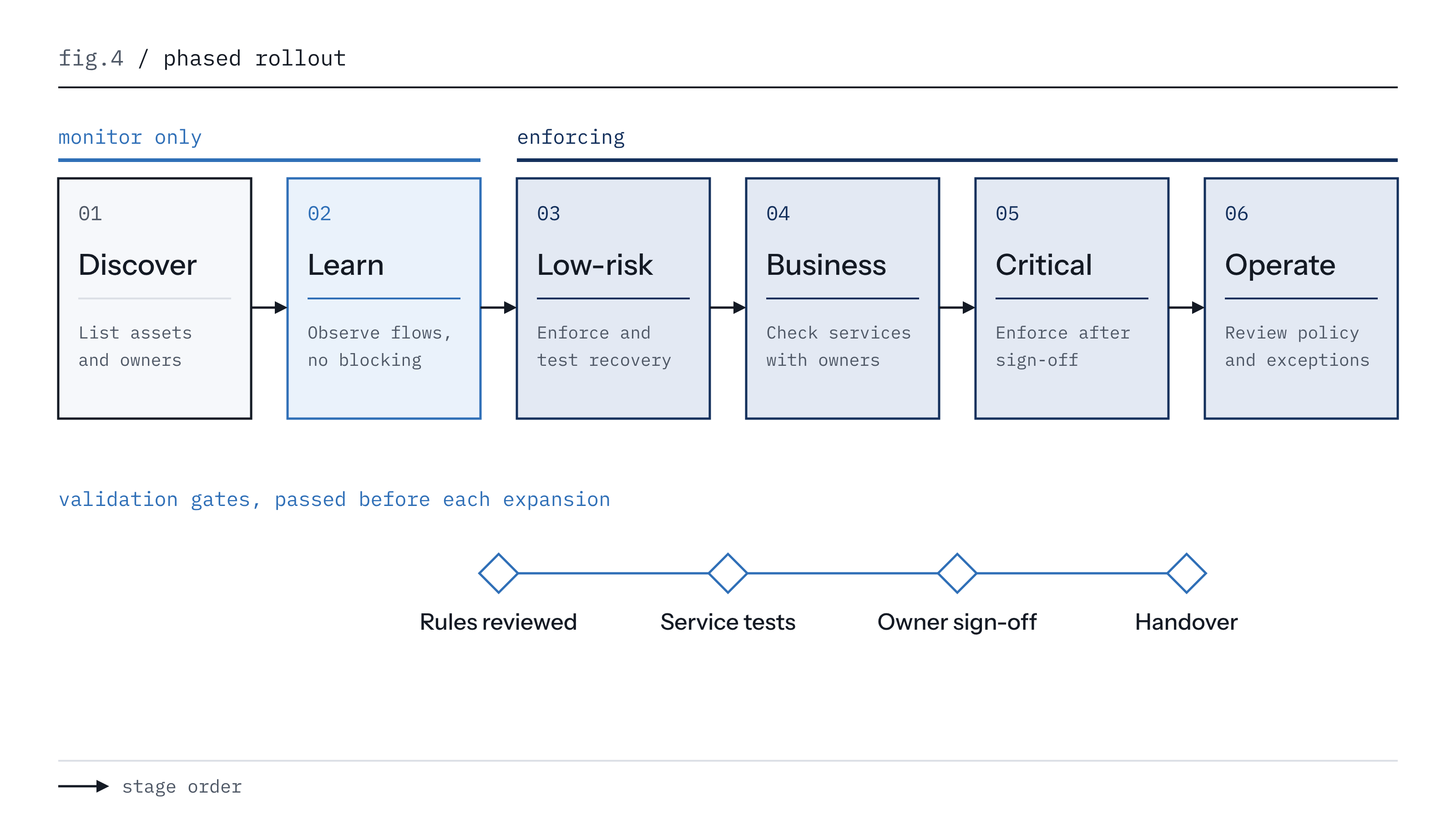
We started in monitor-only mode to see which services actually talked to each other. System owners reviewed the proposed rules, then enforcement moved in waves: lower-risk servers, business services, then critical systems.
The tradeoff is that traffic you observe isn't always traffic you need. So every wave had to pass owner review and service tests, with a rollback ready.
MFA on administrative access
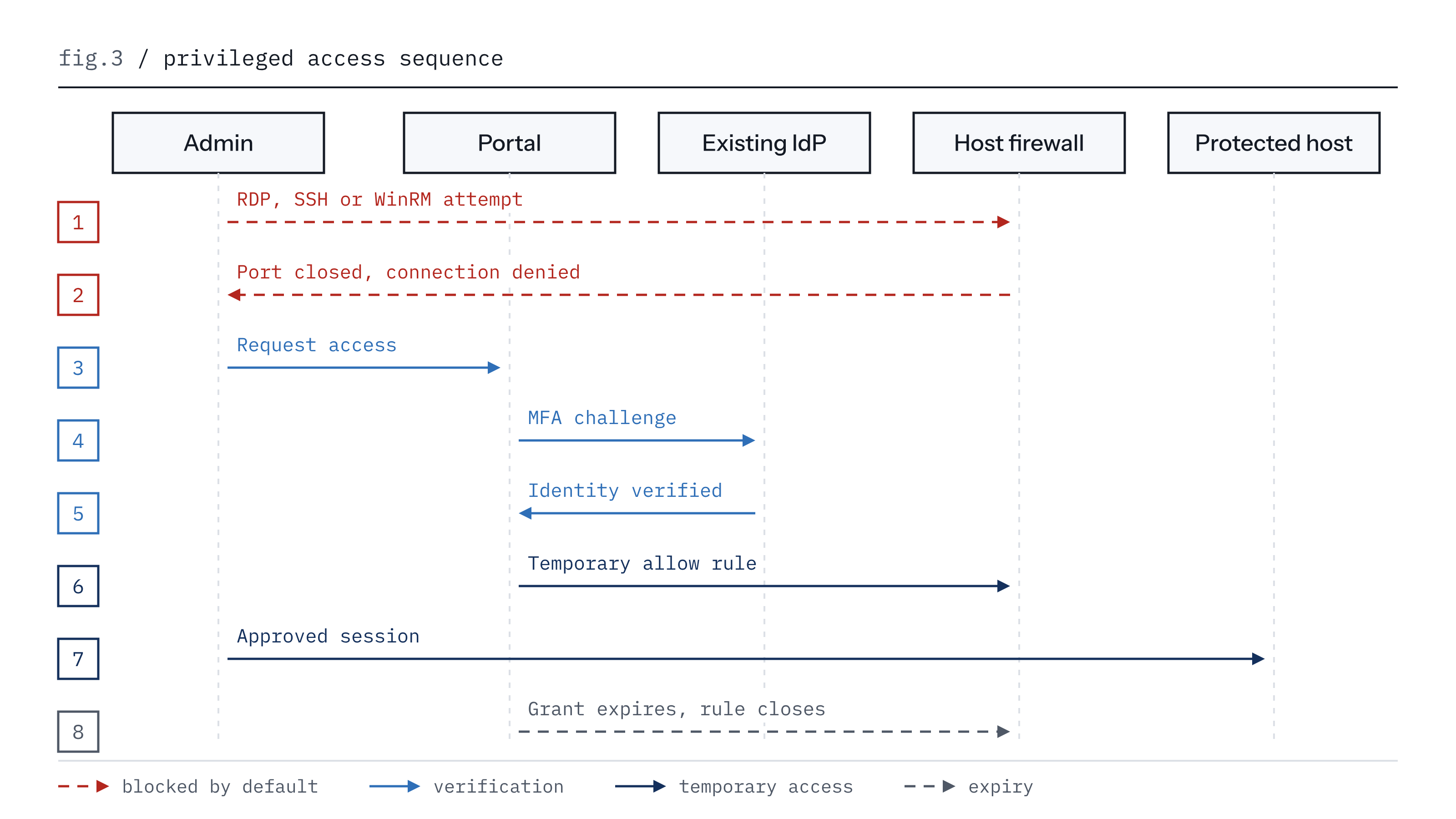
RDP, SSH and WinRM stay closed at the network layer. When an administrator needs a server, they verify their identity and get a time-limited path to that host. When the time is up, the path closes.
The tradeoff is an extra step for administrators. MFA also doesn't stop a credential being stolen. It restricts what someone can do with one.
Architecture and rollout
Access model
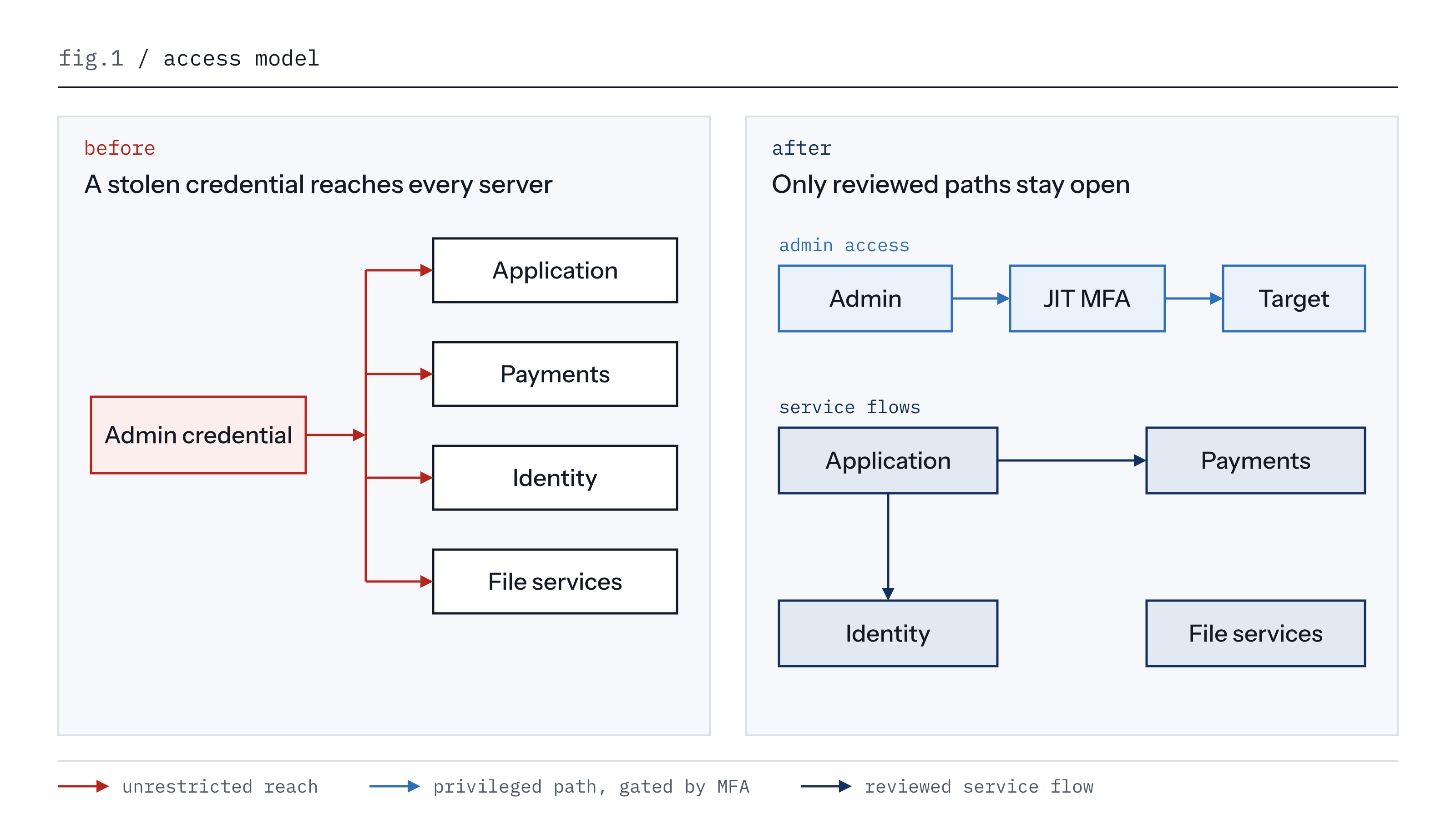
Before, one admin credential could reach every server. Afterwards, only reviewed service flows stay open, and administrative access goes through MFA.
Policy and enforcement
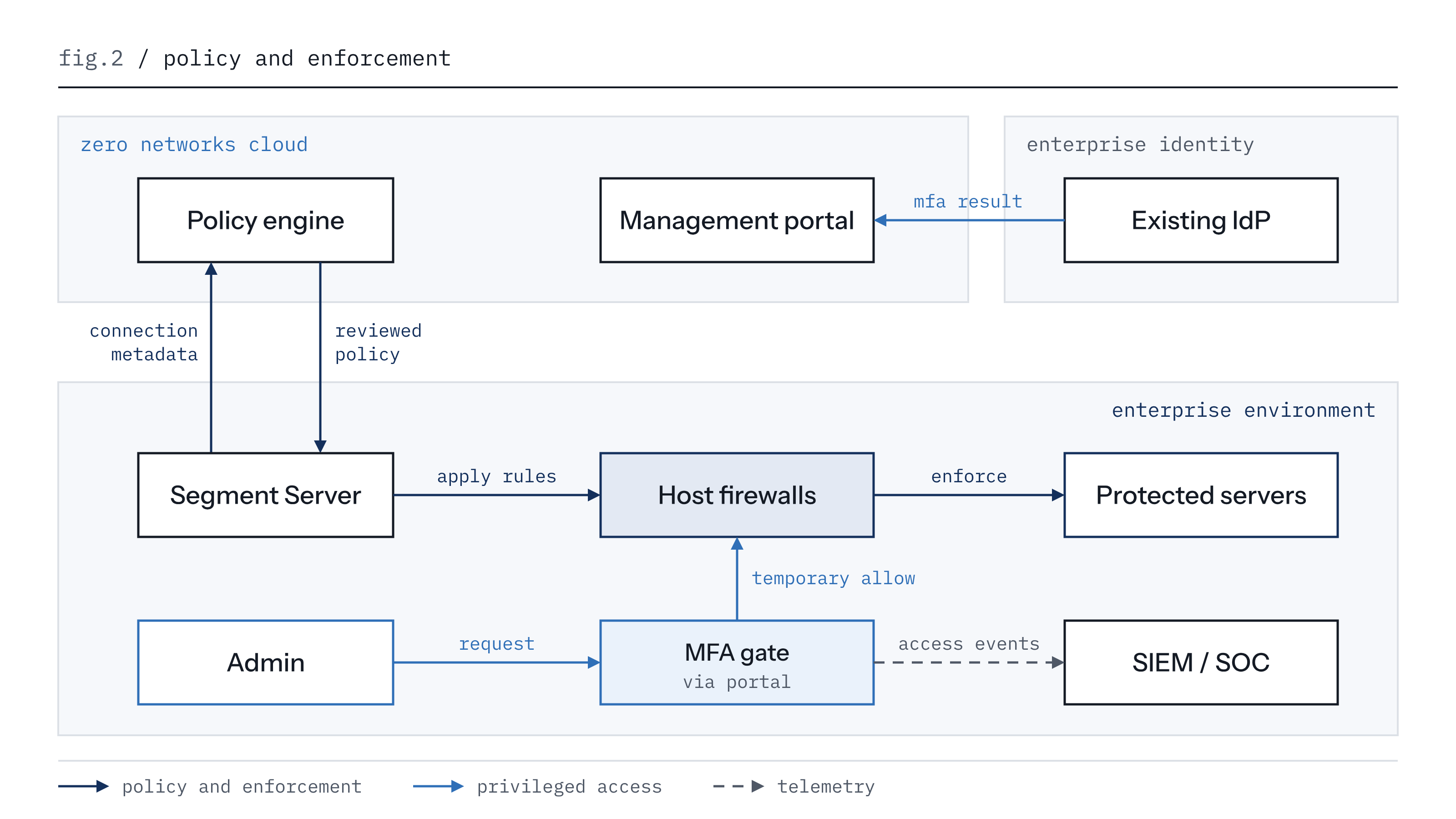
The Segment Server sends connection metadata to the Zero Networks cloud and applies reviewed policy to each server's own firewall. MFA checks go through our existing identity provider, and access events go to the SIEM for the SOC.
Privileged access
An administrator's first attempt is refused because the port is closed. They request access, pass MFA, and the firewall allows that session until the grant expires.
Rollout and validation
I coordinated infrastructure, application and operations teams through each stage. Service tests, exception reviews, rollback readiness and SOC visibility decided when we moved to the next wave and when we handed over to operations.
Outcomes
Enforcement is live across the critical servers in scope, with executive sponsorship behind it.
Server access now follows reviewed policy, privileged paths need just-in-time MFA, and policy and access events are visible to the SOC.
Operations have clear ownership of the policy, with defined processes for exceptions and rollback.